Burning ones, live fired up for God by catching sparks of intimate holy love for the Father and his Son Jesus Christ and then begin releasing fire in your spheres of influence!
Who are you? What is your assignment? What piece of God’s big plan do you fill? How about the people around you? Where do they fit in? Who are you to them, and them to you? Or do you think you can succeed at pleasing God by living in isolation? Brothers and sisters, let’s love one another like a healthy family and fight side-by-side like a well-trained army. Let’s stay in our lane and help others when we can. Here’s a biblical example of a man who did:
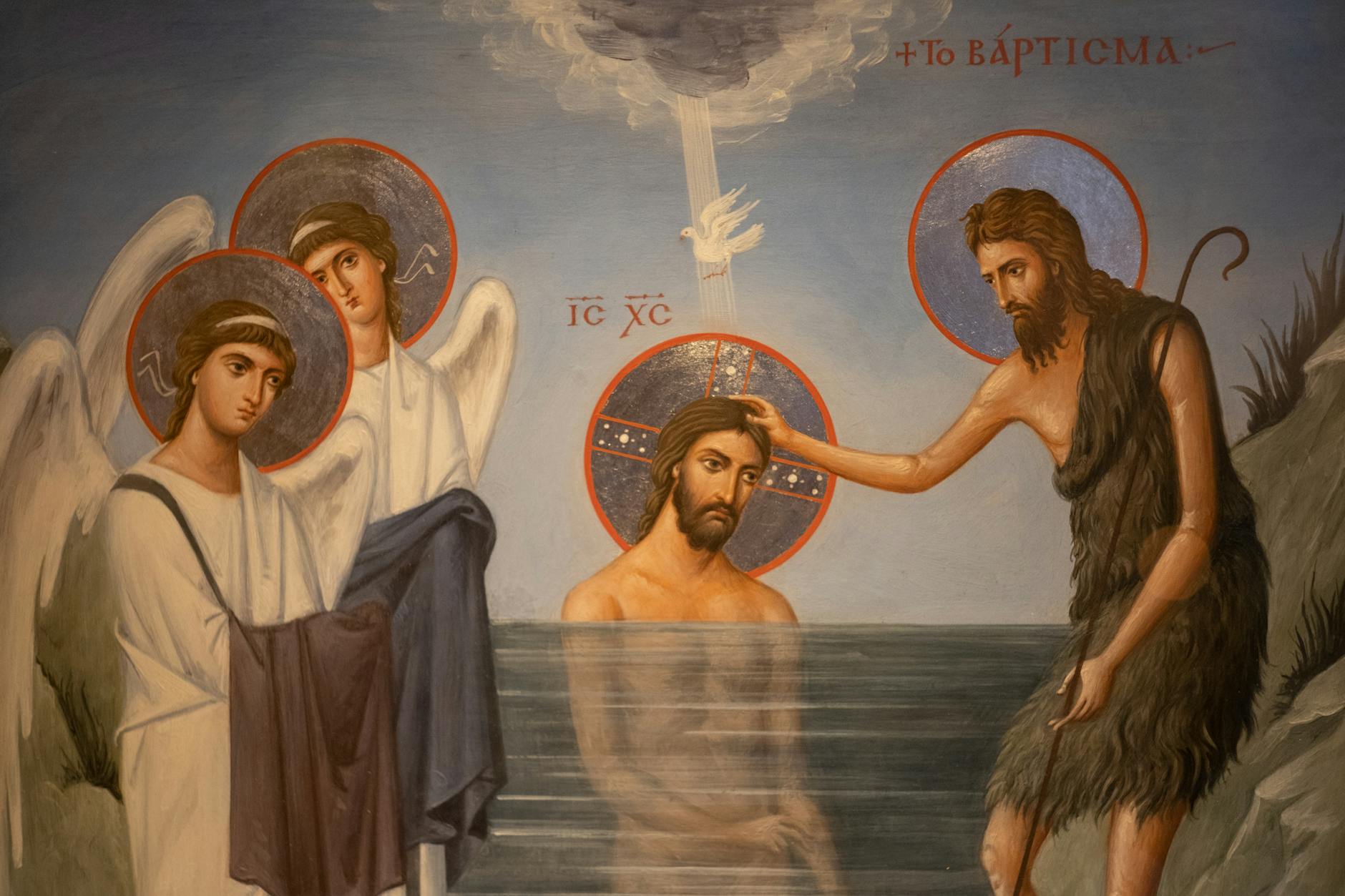
Take a look at John the Baptist. He was unique in what he looked like, where he lived, what he ate, and how he dressed. His work and message were unique. John knew his assignment from God, including some details. He put his heart into his task. John didn’t try to expand his assignment beyond its limits. Rather, he had a deep sense of satisfaction in seeing his work completed and the next piece of God’s larger plan commence.
So, John didn’t get jealous of Jesus. He spotlighted him. Even as John’s prominence decreased, he experienced heart-felt satisfaction knowing he’d been faithful to prepare the world for Jesus and Jesus for the world.
John had this wisdom, a humble attitude: He knew a person can only have what God has ordained for him. He loved, respected and served the Lord Almighty. John was satisfied to live yielded to his Maker. He didn’t rebel by rejecting God’s plan, or presumptuously push it by trying to make it more of it than God had intended. He didn’t jealously try to hang onto his fading popularity. His visible loss of numbers was his spiritual gain in eternal reward. God’s Kingdom benefited. He celebrated.
A life lived, so yielded, accumulates rich everlasting rewards. Whatever a self-serving life may accumulate will disintegrate and blow away with the wind. The choice is ours, daily. Who will we serve? Will we rejoice having fulfilled our purpose? There are rewards in heaven given to those who serve the Lord.
So, let us give our feelings of insecurity, inadequacy, competitiveness, and jealousy to Jesus Christ. Let’s let go of comparisons and receive deeper understanding of our own personal journey. Each of us is uniquely crafted at a given time, with a particular personality and appearance with specific abilities for the Lord’s purpose and its associated assignments. Those plans were put into place before we were born.
As long as we are on the planet, it is never too late to align ourselves with the plans he has for us. We have a new opportunity to choose Him and His will with every breath we take.
God doesn’t compare one person to another in the way that humans do. God doesn’t reward the faithful obedience of those with higher status, wealth, or position more than he rewards the obedience of someone of humble circumstances. Obedience is obedience at whatever level. The Lord looks at our hearts. He examines our motives. He knows us. He gives to us what we’re capable of handling and he’s most concerned about us learning to love.
The Father cares for all his children; those who trust in his Son. He has given all judgment over his kids to his Son Jesus Christ. We will be judged one day, NOT like unbelievers are judged. One day his kids will appear before the judgment seat of Christ. At that time, we’ll be rewarded for whatever we did in Him, with Him, through Him, and for Him. So, let’s pray for deep assurance of His love, clear understanding of who we are, what our purpose is, and the nature of our assignments. Let’s run the race set out for us, arm-in-arm, while loving each other, keeping God’s bigger picture in mind.
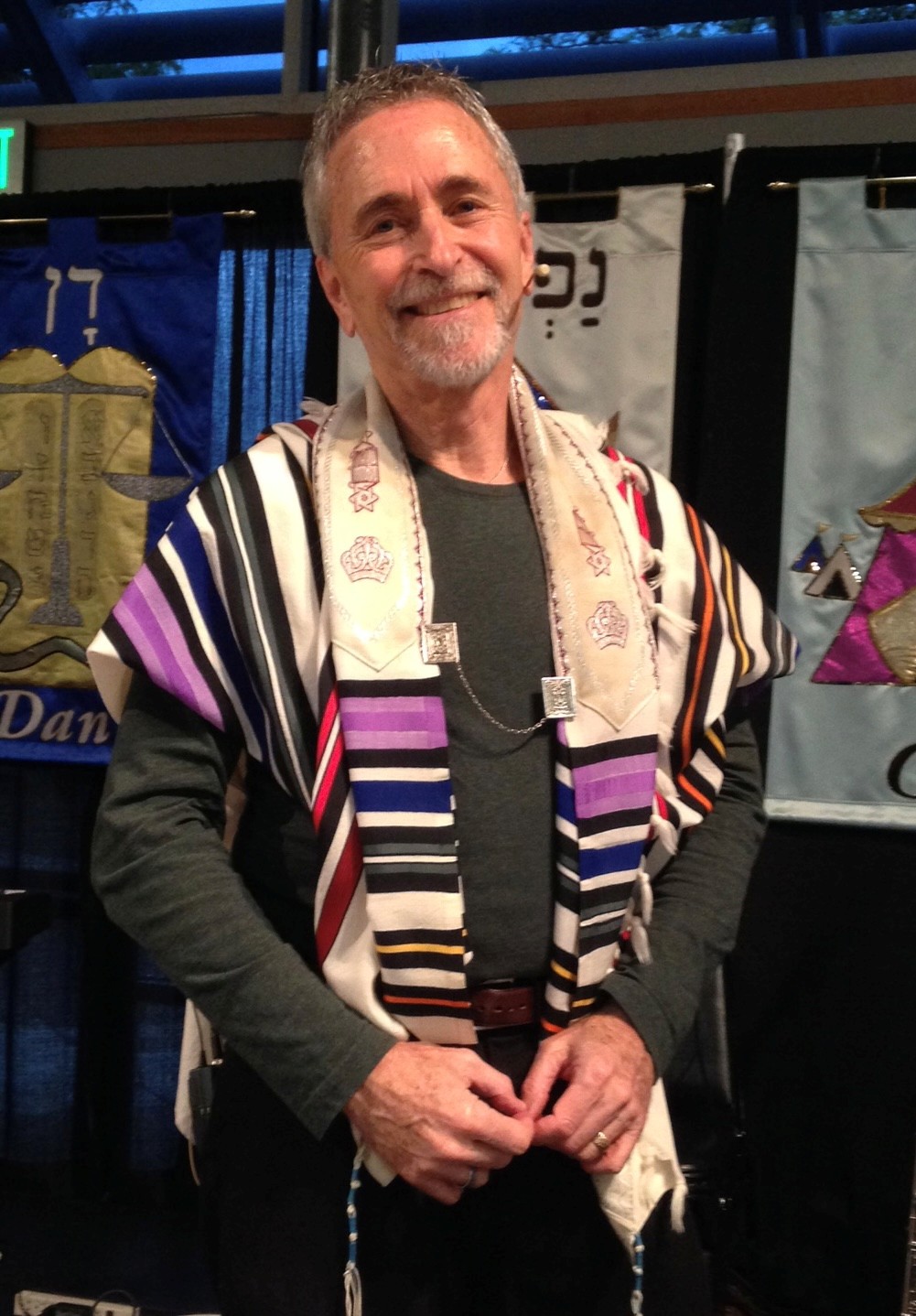
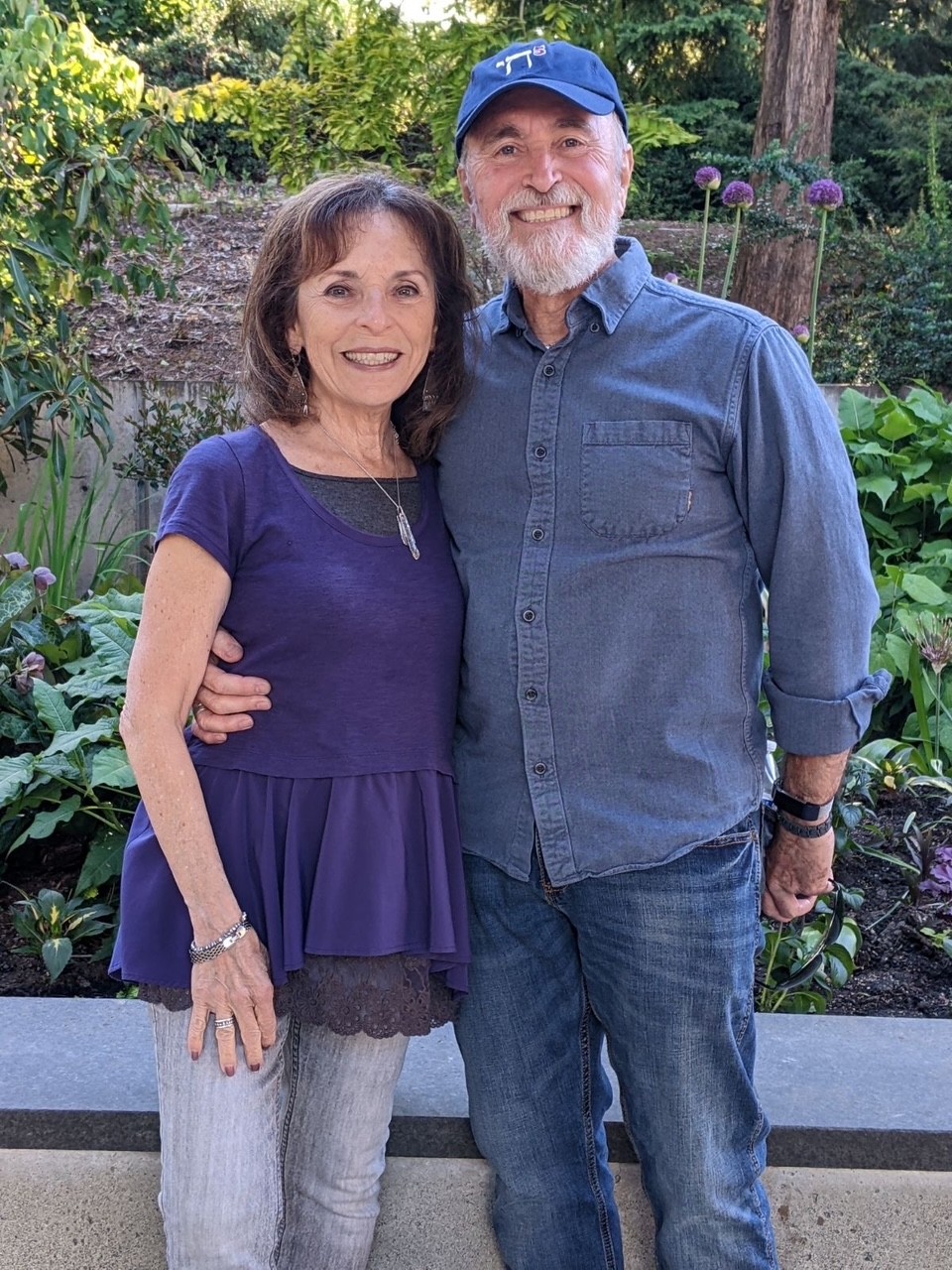
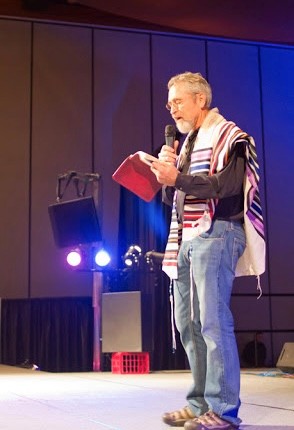
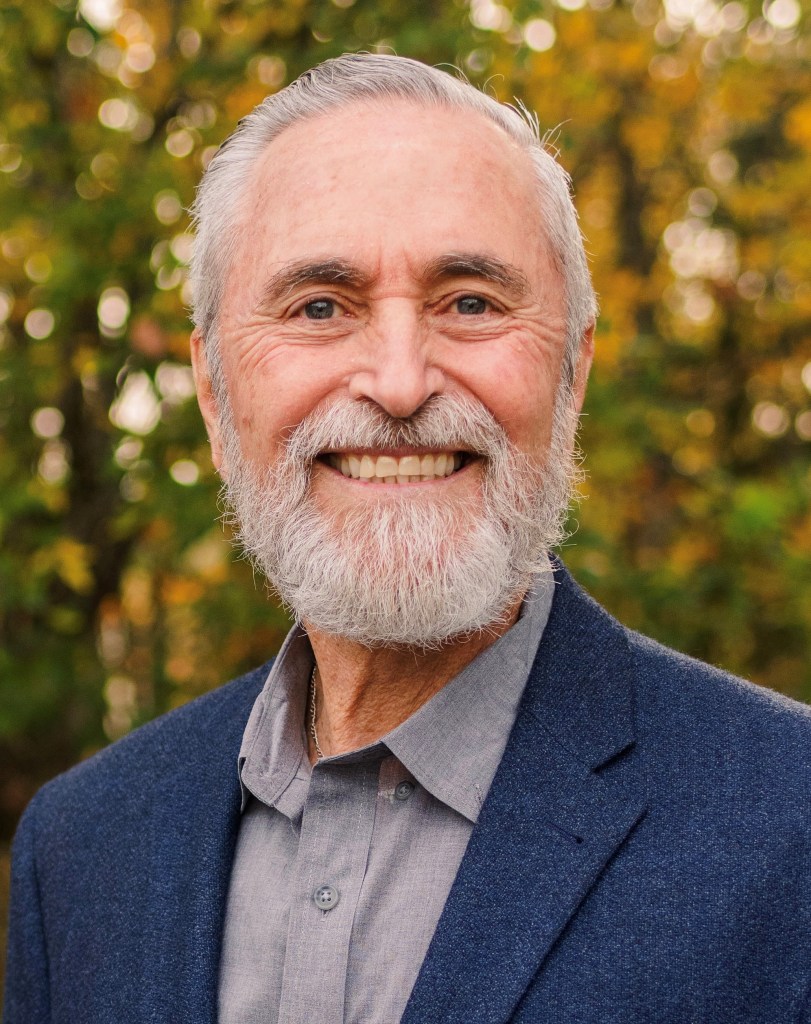
Rabbi Hylan is with us today to help us understand more about how the Old Testament foreshadows Jesus Christ and how the Old Testament and the New Testament connect. Rabbi Hylan pastored a messianic congregation in Western Washington for many years. He has a wealth of knowledge and experience on the subject. Rabbi Hylan, could you please introduce yourself to the people before we start talking about Pentecost?
Rabbi Hylan: Sure.
So, I’m assuming you have primarily a Christian audience. But who knows, someone may tune in, maybe even a Jewish person who may want to learn about the Jewish roots of the faith.
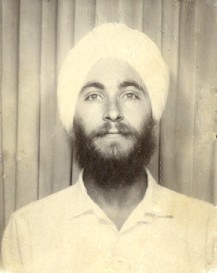
I was raised in a Jewish home and met my wife in 1967. We got married in 1968. We set off on a journey to find truth. We thought we’d find it in India. We joined an ashram. I wore a turban. We were initiated into transcendental meditation.
On the way to India, we ended up at a Christian community called Labri with Francis and Edith Schaefer. That’s where we accepted Jesus as our Lord and Savior. Later we began to call him Yeshua, which is his Hebrew name. That’s maybe another podcast.
Then we backpacked for two years in 15 countries, spent a year in Israel, came back to the states and (this was 1973), got involved in a Jesus movement, and a charismatic revival church in Northern California. That’s where I was eventually licensed and ordained, in 1978 and 1980 respectively.
I went full-time in 1982 and just retired a couple years ago after becoming a pastor for 16 years, and then becoming a messianic rabbi in Newcastle, Washington for 27 years. So that’s the lifetime.
Me: Oh, thank you. Okay. Now, on to Pentecost.
Rabbi, after the resurrection of Jesus Christ, before he ascended to heaven, he told his disciples to wait in Jerusalem until they received power from on high. The New Testament of the Bible tells us that power came on Pentecost, but I don’t see the word “Pentecost” used in the Old Testament. What is Pentecost? And do you know where that word came from?
Rabbi Hylan: I’m glad you asked! What’s interesting about this specific holiday (there’s a lot I could share) Primarily the Christian church over the years has rejected its Jewish roots.
Now almost everybody knows that Jesus was Jewish.
All the apostles were Jewish. Peter, James (whose name was Yakov or Jacob in the original), all the apostles, all the writers of the Old and New Testament were Jewish, save possibly Luke. We don’t know. He could have been a proselyte, a convert to Judaism. We’re not positive, but he definitely understood the Jewishness of the gospel.
The church has lost a lot of its depth and meaning by the anti-Semitism that was established in the early church. The early church fathers (I’m thinking early – Justin Martyr, Polycarp, Ignatius, Aranius, then later Augustine, John Chrisostum) were all anti-Semites, which is hard for a lot of Christians to grasp and even receive. But that’s true. So, a lot of anti-Jewish things occurred in the early church, and throughout the centuries. That’s another podcast or another discussion, because that’s not really what we want to talk about today. But that’s the root of why I want to share today about Shavuot or Pentecost.
So, this holiday… (You can stop me anytime, ask me questions. Of course, this is your podcast. I’m your guest.) This holiday of Shavuot…
“Shavuot” is a word for weeks in Hebrew. Weeks, because it’s 7 weeks plus 1 day after the Sabbath of Passover. So, we get 50 days from Passover. Seven weeks = 49 plus 1. Which is why we call it Pentecost. The word for 50th in the Greek is “Pentecost.”
Shavout is 50 days from Passover, which is why we call it Pentecost. The word for 50th in the Greek is “Pentecost.
So, it’s a very important date in God’s prophetic calendar.
Let me begin by reading something from Leviticus 23. This is where we get the foundation for this specific holiday that became known as Pentecost.
So, Leviticus 23, the first couple verses says this. “The Lord spoke to Moses, saying, ‘Speak to the sons of Israel and say to them, the Lord’s appointed times, which you shall proclaim as holy assemblies. My appointed times are these.’ “
It doesn’t say, “These are the Jewish holidays or the festivals of Israel.” It says these are God’s “appointed times”
So, what’s interesting about these first two verses: it doesn’t say, “These are the Jewish holidays or the festivals of Israel.” It says these are God’s “appointed times” (the Lord’s appointed times is “Moed” in Hebrew). They are to be holy assemblies or holy convocations. Then God goes into these appointed times. One of them, in verse 15, is the feast of weeks.
“You shall count for yourselves from the day after the Sabbath of Passover. From the day when you brought in the sheath of the wave offering, there shall be seven complete Sabbaths, you shall count 50 days to the day after the seventh Sabbath. Then you shall present a new grain offering to the Lord.”
Okay, so we begin counting (50 days) the day after the Sabbath of Passover (The Sabbath would have been the seventh day of the week, the last day). The day after the Sabbath is the first day of the week, which we would equate to Sunday.
Biblical days were from sundown to sundown which is another point. Why in the world would someone start counting a day at midnight, right? At midnight one day ends, another day begins? Most people in the world throughout history were sleeping. But God said when the sun goes down, one day ends and another day begins. It makes so much sense to me!
If we fast forward, from Leviticus 23, roughly 1300 years we get to the first century. What happened the day after the Sabbath of Passover in Matthew 28? Well, let me pull that up for you.
Matthew 28:1 says, “Now after the Sabbath, as it began to dawn toward the first day of the week, Mary Magdalene and the other Mary came to look at the grave. And behold, a severe earthquake had occurred. For an angel of the Lord descended from heaven, and came and rolled away the stone, and sat upon it, and his appearance was like lightning, and his garment as white as snow. And the guards shook for fear of him and became like dead men. And the angel answered and said to the women, ‘Do not be afraid, for I know that you are looking for Jesus, who has been crucified. He is not here, for he has risen, just as he said.’”
After the Sabbath ended, it began to dawn the first day of the week. Mary Magdalene and the other Mary came to look at the grave. The grave was empty. Jesus had risen from the dead. When? On the first day of the counting. The 50-day count began on Resurrection Day and it ended on Shavout (the Feast of Weeks, or the feast of seven weeks plus one, later to be referred to as Pentecost in the church community). So, that’s the history.
What’s interesting is that biblical holidays have specific months and days on the calendar. But Shavuot doesn’t. It’s the only one that doesn’t have a specific month and day, because it’s directly connected to Passover. You count from the day after the Sabbath of Passover, 49 days plus one. So why is this important? Because Pentecost could be considered the fulfillment of Passover, or you could consider it the completion of the resurrection.
Now, in agricultural terms, this 50-day time period was when farmers were anticipating their ripening crops, the ripening grain, hoping and praying for an abundant harvest. Now, this plays right into Acts Chapter 1 and Chapter 2.
So, what was Passover about? Passover was about, well, a lot of things. The Jewish people were slaves 400 years in Egypt. So, freedom from slavery. Passover was about God’s authority over idols and the gods of men. Some of your listeners might know that every plague of the 10 plagues… The Egyptian people worshiped and served those gods. The god of the Nile; the god of lice; the god of frogs; Ra, the god of the sun. All these plagues defeated idols of the Egyptians. So, Passover was about God’s authority over idols.
Passover was about deliverance from persecution and oppression by the enemy. Passover was about God’s provision in the wilderness for 40 years, daily manna, daily bread, and so much more. And ultimately, Passover was about the possession of the land that God had promised to Abraham generations before. So, coming out of Egypt, the first Shavout, or Pentecost, was during the first week of the month of Sivan which was the third month of the biblical calendar. I don’t want to get too technical for your listeners, but let’s look at what happened on the third day of Sivan in Exodus 19. So, I’m going to turn to Exodus 19 in my Bible. the second book of the Bible, Exodus 19.
We read this in verse one: “In the third month, after the sons of Israel had gone out of the land of Egypt, on that very day, they came into the wilderness of Sinai. (So, this is important because this is the time of Shavout, later known as Pentecost.) So it came about on the third day when it was morning that there was thunder and lightning flashes and a thick cloud upon the mountain and a very loud shofar sound so that all the people who were in the camp trembled and Moses brought the people out of the camp to meet God and they stood at the foot of the mountain.”
I could go on but your people can read it later.
This is the story of God appearing on Mount Sinai giving the ten commandments. By the way, they’re not called commandments in scripture. They’re just called the 10 words. And this incredible scene took place.
Then in Chapter 20:1 it says, “Then God spoke all these words to the people and they heard a voice coming from the mountain and it was God speaking.”
That’s why they said to Moses, “Moses, you go up. We don’t want to get near that place.”
So, only two months before, they were slaves in Egypt. They were delivered from 400 years of slavery and now they were free. But how do you live as free people? They’d been slaves for so long. They were not a nation. They were slaves and they didn’t rest.
By the way, the sign of the covenant that God made with Moses in the wilderness; the sign of the covenant was the Sabbath, the Shabbat, the Sabbath day. Why?
By the way, the sign of the covenant that God made with Moses in the wilderness… was… the Shabbat, the Sabbath day. Why? Because slaves don’t rest.
Because slaves don’t rest. So, this was very specific. So, how do you function as a nation, as a free nation? The new nation needed boundaries. They needed a way to define their freedom, right? Because freedom without boundaries is tyranny.
So, God gave them 10 foundational principles, his instruction, his teaching.
By the way, the word “Torah” in scripture is normally translated “law.” But “law” is not a good translation of the word Torah. The Hebrew word “Torah” in English means “instruction or teaching,” not “law.” It’s a very different feel, if you look at it that way.
We don’t want to reject God’s instructions. In fact, Jesus said in Matthew 5:17, he did not come to abolish the Torah. (It says law, right?) He did not come to abolish the Torah (or the prophets), to teach his own instructions, but that they might be fulfilled in him.
So, if we reject the Torah or the law, we have to reject the creation story. We have to reject Noah and the flood, Abraham, all kinds of stuff, and the ten commandments. So, if Jesus didn’t come to abolish the Torah (his instruction), but that they might be fulfilled in him, then what is it about the Torah that we need to keep? And that’s a huge discussion.
I just want to say that in Exodus 32, (this is the story of the golden calf when Moses went up on the mountain to intercede for the people), he came down and Aaron had made a golden calf. When Moses approached Aaron, he said, “Aaron, why did you do this?” Aaron says, “Well, the people made me do it.”
Yeah, right, Aaron. Like he had no volition in this creation.
But Moses comes down. He was so grieved by the idolatry of his kinsmen that he actually offered his own life to sacrifice for God, if God would spare them and forgive their sin. But God said, “I will punish them for their sin.” And 3,000 people died.
Well, what happened in Acts Chapter 2?
So, now I’m going to jump ahead to Acts Chapter 2 again. Remember I just mentioned that in the wilderness 3,000 died because of their rebellion. Now we see in Acts 2:40 “with many other words Peter solemnly testified and kept on exhorting the Jewish people saying, ‘Be saved from this perverse generation.’ So, those who had received his word were baptized and there were added that day about 3,000 souls.”
Now, to me, this is no coincidence. In Exodus 32, three thousand died for rejecting God’s word. In Acts 2 on Pentecost, 1300 years later, three thousand were born again after receiving God’s word.
This is one of the mysteries of God. People say, “Oh, 3,000 people were killed. God must be mean and angry.”
Then 3,000 come into the kingdom. There’s a much bigger story taking place here. You know, a day is but a thousand years to the Lord. A thousand years is but a day. And we put so much stock in these 70, 80, 90 years that we’re alive on this earth, but really, it’s a blink. It’s a vapor. It’s temporary. But we’re going to live forever and spend eternity with God.
So, I don’t know when this podcast is going to be aired, but Pentecost Sunday in 2026, is May 24th.
Pentecost Sunday in 2026, is May 24th.
For me, it’s a really important day. Of course, I’m a Jewish believer. But for many churches, maybe the majority, they don’t do anything on Pentecost Sunday. They just say, “Well this is Pentecost Sunday,” and they preach on something else, or do something else. But to me it’s such a big deal because it’s the fulfillment of Acts Chapter 2.
Most people say the church began in Acts Chapter 2 on Pentecost. I don’t say that. Maybe you do. People ask me, “When did the church begin?” I say, well, it began in Genesis 12 when God called Abraham out of the Chaldeans and he said, I will bless those who bless you and he who curses you I will curse and through you, Abraham, through your seed many families of the earth will be blessed.
God’s covenant that he made with Abram at the time was land and people.
He’s going to give him a specific piece of real estate which is currently the nation of Israel. But then it included from the river in Egypt to the Euphrates. So that includes all the Sinai desert, Jordan, parts of Syria, Lebanon, Iraq (because the Euphrates is in Iraq), and maybe a bunch of Saudi Arabia. That was the land that God gave to Abram.
So, the church began when God made a covenant with Abram. It says in Galatians 3:29, “If you belong to Christ then you are Abraham’s offspring, heirs according to promise.”
It says in Galatians 3:29, “If you belong to Christ then you are Abraham’s offspring, heirs according to promise.”
The Apostle Paul
Now, not heirs according to blood, because there’s physical descendants of Abraham like me. Then there’s spiritual descendants, like you; Christians who’ve accepted this covenant. So, Pentecost is important, Jewish roots are important, and the church began, I believe, in Genesis 12. We see it being fulfilled, God’s plan throughout history.
Pentecost or the Feast of Weeks, 50 days after the Resurrection, definitely was a hallmark, and a huge springboard for the church. The church took-off because thousands got saved. Three thousand on that day and then maybe a few days or a few weeks later, another 5,000 and the church was growing like crazy. Some estimates say that there were 100,000 Jewish believers in the early church before it was even called the church. You know, the early believers were all Jewish up until Acts Chapter 10, the first recorded gentile, Cornelius gets saved.
So, depending on which historian you talk to, from Acts 1 to Acts 10 is anywhere from 10 to 27 years, and there were no Gentiles. They were all Jews celebrating, worshiping Yeshua. Their Messiah, had come. He was filling them with his Holy Spirit and they were spreading the gospel. The church was growing and it was quite a phenomenal time until 70 AD, when the Romans decided, “We’re going to squelch this opposition.”
The rest is history. That’s my monologue.
Me: Okay, I have been reading from Leviticus 23 about the Feast of Weeks and what the Jewish people were instructed to do back then. Something about two loaves of bread, seven lambs, a bull, two rams, a drink offering, and then a male goat. There’s a lot of different offerings being talked about for the original Pentecost. So, the priests had two loaves of bread. They waved them or something. Do you have any idea?
Rabbi Hylan: Yes, the first harvest is the barley harvest. That was celebrated right after Passover. It’s called “The Feast of First Fruits” or “Bikkurim.” That’s also in Leviticus 23. Since you’re there, let me turn to Leviticus 23 again.
So in Leviticus 23:9, “The Lord spoke to Moses, saying, ‘Speak to the sons of Israel and say to them, when you enter the land which I am going to give to you and reap its harvest, then you shall bring in the sheath of the first fruits of your harvest to the priest, he shall wave the sheath before the Lord and for you to be accepted on the day after the Sabbath.’ The priest shall wave it.’”
This is again the day after the Sabbath of Passover that became Resurrection Day. And to me for Christians this should be so important and so exciting. They would take the first fruits of the barley harvest. While the barley was ripening, the priest would go into the barley field. He would find the barley that was ripening earliest and he would wrap a ribbon around that stack or stalks of barley.
Later, when he goes out to harvest, he could pick the first fruits, the ones that ripened first. Then they would wave that barley as a wave offering, saying, “God, thank you so much for providing the early harvest.”
Well, I mentioned earlier, during the 50-day count from this day to Shavuot (the Feast of Weeks, 49 days plus one) the wheat harvest was ripening. After the wheat harvest, they would grind the wheat berries and make bread. Then they would wave two loaves of bread before the Lord and thank God. “Thank you for the late harvest, the second harvest.”
There’re different interpretations of why the two loaves. To me as aJewish believer, that’s a picture of the Jew and Gentile. That’s the one new man. Think about that.
They would wave two loaves of bread before the Lord and thank God…. That’s the one new man. Think about that.
Rabbi Hylan: That’s the one new man, Jews and gentiles together as Paul talks about in Ephesians 2. According to Ephesians 2, the Jew doesn’t join the church. The Gentile joins the nation of Israel. That’s another discussion.
You can see in Ephesians 3 a mystery that’s been revealed; that Gentiles can now be part of the kingdom of God.
What happened over the centuries? Gentiles became arrogant. It’s just what Paul warned against in Romans 11. Gentiles became jealous, disillusioned, and deceived. I think it’s because the church began to believe the Jews killed Jesus. They called it “deicide,” the killing of God. And that’s why there was so much anti-Semitism, so much hatred toward the Jewish people.
But nobody killed Jesus. He offered his life freely as sacrifice. In fact, he said he could call down legions of angels to save him if he needed to. Peter, in the garden, cut the ear off a Roman guard. So, this whole idea that the Jews killed Jesus is bogus. It’s error. But that idea became ingrained in the early church.
Me: The Romans were as responsible for that as the Jews, maybe more so.
Rabbi Hylan: Yeah, but the Romans didn’t kill Jesus either! I mean, technically Jesus freely gave his life as a lamb led to slaughter. It was his choice. He could have stopped the whole thing if he wanted to.
Me: Right. He could have. Yeah, that’s true.
Rabbi Hylan: Yeah. So, Gentiles join the commonwealth of Israel. In Ephesians 3 it also says, “the household of faith.” Then in Ephesians 3, Paul says, “Now this is the mystery revealed.” He says it so clearly.
Paul says in Ephesians 3, “By revelation there was made known to me the mystery as I wrote before in brief. And by referring to this, when you read, you can understand my insight into the mystery of Christ, which in other generations was not made known to the sons of men, as it has now been revealed to his holy apostles and the prophets in the spirit.” And to be specific, here we go. “That the Gentiles are fellows and fellow members of the body and fellow partakers of the promise in Christ Jesus through the gospel of which I was made a minister according to the grace of God.” So, so that’s another interesting perspective. That is a reason why this podcast is important, a reason why Christians’ understanding their Jewish roots are so important.
Part Two
Me: We are picking this up a few days later and continuing our conversation about how the Old Testament relates to the New Testament and how Jesus is foreshadowed by the spring feasts.
So, Rabbi, good to see you again. Could you help us understand how the Abrahamic covenant, which you talked about a lot in the first part of our interview, relates to the new covenant?
Rabbi Hylan: Well, that’s a really good question. What I really appreciate about you and what you’re doing here is you’re connecting the big picture. Most Christians (I would say most. I don’t know what the percentage is, but it’s a huge majority of Bible believing Christians), don’t really understand the Jewish roots of their faith.
They quote the Old Testament. They love the Old Testament. And they understand how important the creation story is, and Noah and the flood, and Abraham (We’re going to get to Abraham in a minute), and the whole history of Israel.
But when it comes to the church, all that previous history to the average Christian is insignificant, except for some historic value. I would say they don’t get the spiritual value and impact that understanding the Jewish roots of the Christian faith really has for us as believers. It’s not a salvation issue because we are saved by grace through faith plus nothing. But it’s an understanding of how we walk out our faith and how we can grasp God’s picture, the big picture that God created, 3,500 years ago basically.
So, you ask about the Abrahamic covenant, and you can interrupt me at any time, ask questions. Of course, this is your podcast.
So, the Abrahamic covenant was actually a covenant that God made with Abram in Genesis 12. It started in Genesis 12 where God said to Abram, (“Avram” in Hebrew, the B is actually a V sound in Hebrew, “Avram.” If you want a Hebrew lesson, the R is rolled where you gargle. So, it’s “Arvam.” Anyway, I’ll call him “Abram,” for most of your people will feel better about that.
Later, God changed his name from Abram to Abraham; from the father of many to, the father of a multitude. So, in Genesis 12, God tells him to leave Ur of the Chaldeans, and I will send you to a place and that you know not of. So, Abram believed God.
Later we see, I think in Genesis Chapter 17, he believed God and it was reckoned to him as righteousness (which the apostle Paul, also … refers to in Romans 4 if I’m not mistaken). Abraham believed and it was credited to him as righteousness.
So, because Abram believed, God makes a covenant with him. He says, “I will bless those who bless you and he who curses you I will curse, and in you, Abram, all the families of the earth shall be blessed.”
That’s quite an amazing promise, right? How could that be? I mean, Abram didn’t have any children. Yet, He’s going to use this man to bless all the families of the earth. Now we understand, fast forward, that the Messiah is going to come through Abraham’s loins, right? Therefore, every family could be blessed through the loins of Abram.
So, what was his covenant? The covenant was twofold. Covenant God promised, I will give you seed or descendants, offspring that will be like the stars in the universe. If you can count the stars, that’s how many offspring you’ll have. That’s in Genesis 12. Then later, God says it’ll also be like the sand of the seashore. If you can count the sand of the seashore, that’s how many descendants you’ll have. Now, I don’t know if anybody’s ever tried to do that; it might be an impossible task. But that was the covenant.
The sign of the covenant was circumcision. This was going to be the sign that set Abraham’s offspring apart from everyone else in the world, from all the Gentiles.
Okay. So, how does that covenant relate to the New Covenant for Christians? Well, … what is the new covenant? Now, this is another, really interesting discussion, and it connects to Passover. One of the questions you wanted to ask me a little bit later is how do the festivals of Israel have impact for Christian today? Well, in every way is the answer.
So, when Yeshua (Jesus), was celebrating the last supper…. I would say most Christians know that was a Passover meal, what we call a seder, the Passover seder. But they don’t really get the significance and the history.
Okay, it’s Passover. Big deal. We (Gentile Christians) don’t celebrate Passover, but Jesus did. This is the last supper. The last supper was the last meal Jesus had with his disciples. It was where he said that one of them would betray him.
He washes their feet at the last supper. He talks about the lamb of God. Then he tells them he’s going to be betrayed. From the last supper he goes to the Mount of Olives and that’s when he’s betrayed by Judas.
At that Passover seder, Yeshua said something very important. Now, there’s four cups of wine that are taken during the Passover seder. The third cup is called the cup of redemption. Jesus (Yeshua) picked up this cup and he said, “This cup is the New Covenant in my blood.”
Jesus (Yeshua) picked up this cup and he said, “This cup is the New Covenant in my blood.”
Now, I wish I were a little birdie on the shoulder of one of the apostles at that last Passover because when he said, “New Covenant,” their eyes must have gotten wide. There’s only one place in the entire Bible… the only Bible they had was the Old Testament at the time.
By the way, I call it the Old Testament and the New Testament for the sake of most of your audience. However, none of the apostles, not Jesus, no one called it, “the Old Testament.” It was “The Hebrew Scriptures”. It was, “The Word of God,” the only word they had because the New Testament hadn’t been written yet. And I don’t like calling it, “The Old Testament,” because that came about in the 4th Century with Jerome, when he translated the Greek Bible into Latin, He started referring to the Old Testament and the New Testament. I just like calling it, “The Hebrew Scriptures” and “The Greek Scriptures” and “The Bible.”
Anyway, there’s only one place in the entire Hebrew Scriptures where the phrase “New Covenant” appears. So, when Jesus (Yeshua) said, “This cup is the new covenant in my blood,” all the disciples would have thought about Jeremiah 31. Now, why is that?
Every Jew knew about the covenants, because God is a covenant-keeping God.
Every Jew knew about the covenants, because God is a covenant-keeping God. They knew about the covenant God made with Abram. Even before that, the covenant God made with Noah when he said, “I will no longer destroy the earth by flood” and “the sign of the covenant is the rainbow.”
The sign the covenant God made with Noah is the rainbow.
Every Jew knew about Noah and the ark and the covenant. Every Jew knew about the covenant God made with Abram in Genesis 12. That’s their covenant: “I will bless those who bless you. He who curses you I will curse. And in you all the families of the earth will be blessed.”
And the sign of the covenant was circumcision.
The sign of the covenant God made with Abraham was circumcision.
God’s promise was descendants and land. A specific piece of real estate which was currently known as Israel, but much larger. The covenant was people, descendants, seed, and land (a piece of real estate from the river in Egypt, to the Euphrates up somewhere in Lebanon, down into Saudi Arabia. It included all the Middle East as we know it today, including Jordan, Iraq, Lebanon, and Syria. That was the land that God promised to Abram.
They knew about the covenant that God made with Moses. The Jewish people knew God made a covenant with Moses in the wilderness. God gave them the Ten Commandments. He taught them how a nation should operate. You know, they were slaves for 400 years. Now they’re a nation. What do they do? They need boundaries. They need laws, precepts, statutes. And God gave all this information to Moses. He wrote it down in what we call, “The Torah,” the five books of Moses.
The sign of that covenant that God made with Moses was the Sabbath.
The sign of that covenant that God made with Moses was the Sabbath.
Why was it the Sabbath? Because slaves don’t rest. For 400 years they were slaves. Now they’re free men. How do free men, free women; how do they live? What do they do, without killing each other? God gave them the rule book of how to live as the nation that became known as Israel.
Okay, fast forward I don’t know how many years from the wilderness to Jeremiah. I’m going to guess it’s four, five, 600 years. I’d have to look on a timeline. Doesn’t matter. Hundreds of years later, Jeremiah writes Jeremiah 31, and I actually pulled it up so I could read it to you.
Really easy numbers to remember, Jeremiah 31:31: “Behold, days are coming, declares the Lord, when I will make a new covenant with the house of Israel, with the house of Judah.”
This is the only place the phrase “new covenant” appears! So, when Jesus holds up the cup and says this cup is the new covenant in my blood, this was the only place where it’s describing a new covenant. And from Jeremiah to Jesus is about 600 years. So, sages and rabbis were wondering all this time, what in the world does this mean? What is this new covenant all about?
Well, Jeremiah writes what God tells him to write. And here’s what the Lord says: “I will make a new covenant with the house of Israel and the house of Judah. Not like the covenant which I made with their fathers in the day I took them by the hand to lead them out of the land of Egypt. My covenant which they broke.”
So, Egypt comes up all the time, over 700 times in the Bible. Egypt is very important. And so, this Passover that Jesus was celebrating, it was about deliverance from Egypt. This is one thing we could talk about later, but it’s important now because Jesus was celebrating Passover.
So, the Christian needs to ask himself, “What was the significance of Passover?” It was deliverance from oppression. It was salvation from our enemies.
Me: That translates now to freedom from sin, freedom from slavery to Satan, freedom to choose and live.
Rabbi Hylan: Exactly. In fact, the Apostle Paul (I like calling him Rabbi Shaul), the Apostle Paul in Romans 6 says that because of the resurrection of Jesus, we are no longer slave to sin. Right?
That was important for me. I got saved later in life. I had a lot of sins to confess and I realized I was no longer slave to those things. That’s another discussion, but it’s a good point to share with people, when they want to know about the gospel.
So, the Passover was important. He’s going to make a new covenant, not like the one when they came out of Egypt. Okay, that was the one they made with Moses, which they broke over and over again.
My covenant, he says, “’This is the covenant which I will make with the house of Israel after these days,’ declares the Lord. ‘I will put my Torah within them…’” (Torah, the word normally translated “law” is the word “instruction.” I think I mentioned that last time in part one.)
“’…I will put my teaching, my Torah within them and on their heart I will write it.’”
“’…I will put my teaching, my Torah within them and on their heart I will write it.’”
Now, this is interesting because up until this point, the word of God, the Torah, was written with a pen, an ink on animal skin. And God says, “I’m going to write it on your heart, and I’m going to put it inside of you.” What does this mean? People were wondering for years, what does this mean?
“’I will be their God, and they shall be my people. And they shall not teach again each man his neighbor and each man his brother saying know the Lord for they shall they shall all know me the least of them to the greatest of them declares the Lord.’”
So that was different, because up until this time and even after this time the covenant hadn’t been fulfilled yet. In order to sacrifice, you had to go to the temple. You had to go to the priest. There was a system, priest, and sacrifice, in order to get forgiveness of sin. You had to go to the priest. It’s where the Catholic Church got their system from, by the way. You have to go to the priest to confess your sin. But they don’t have to do that anymore in the new covenant.
“‘They will all know me,’ says the Lord, ‘from the least to the greatest.’”
“‘They will all know me,’ says the Lord, ‘from the least to the greatest.’”
They don’t have to go to the priest any longer. And in the New Covenant, the last point says, “I will forgive their iniquity, and their sin I will remember no more.”
What is iniquity? Iniquity is the inner drive to sin. God says, “I will forgive that inner drive to sin, your iniquity, and I will remember your sins no more.” Or in common language, I will forget your sins. Now this is a mind-blower this whole idea because the all-knowing, omnipotent, omnipresent, omniscient God; the God, who knows all, has chosen to forget something. Only place in the Bible, it says that. What has he forgotten? Our sin, (because of) the new covenant.
God, who knows all, has chosen to forget something…. What has he forgotten? Our sin, (because of) the new covenant.
What is the new covenant? “This cup is the new covenant in my blood.” That’s where we get these songs. We’re washed in the blood. Our sins are washed away by the blood of the lamb. As a new believer, I had no idea what I was singing. I didn’t know what that meant. Washed in the blood. That’s gross, you know. But …our sins were as scarlet and now they’re white as snow.
You’re no longer a slave to sin. “If you can confess your sins, God is faithful and just to forgive your sin and to cleanse you of all unrighteousness.” And in that cleansing, God has chosen to forget our sin.
You know, I’m sitting here at my computer and you’re at your computer. On my computer I have a little note right here on the bottom left. I didn’t date it. I wish I had dated it. But a couple years ago, I was sitting here and an old sin came to mind, a sin from 50, 60 years ago. I was in my early 20s. That’s dating me, I know. And I said, “Oh, God, thank you for forgiving me of that sin.” And I heard a little voice in my head say, and I’m reading it right now, “I don’t remember that sin.”
And I was stunned. And then I stopped and I heard it again. It wasn’t audible, but it’s in my head. That’s happened to me a couple times. I hear this voice in my head. I don’t remember that sin. I said, “Oh, of course you don’t. You’ve chosen to forget it under the blood of the lamb in the new covenant.”
“I hear this voice in my head. I don’t remember that sin.”
Rabbi Hylan
So, the Abrahamic Covenant is fulfilled in the New Covenant. And that’s why Paul could say in Galatians 3, and I know it by heart pretty much, but I’ll just read it to you because I have my Bible right here. That’s why Paul could say, “And if you belong to Christ, then you are Abraham’s offspring, heirs according to promise.”
Now, you’re not natural heirs like me. I’m a Jew, born a Jew. I’ll die a Jew. I’m of the physical descendants of Abraham, but I’m a descendant also, because I’m a believer in Yeshua, in Jesus. I’m of the spiritual seed of Abraham or what he calls the offspring heirs according to promise.
So, all Gentiles are now also Abraham’s offspring in a spiritual sense. And so, we see that scripture in Romans 4. I don’t have to read it. I mentioned earlier that Abraham had faith. So, it’s the faith chapter. He believed and it was reckoned to him or credited to him as righteousness. I think it’s John 8, where Yeshua says, “before Abraham was I am.” That’s when the Pharisees picked up stones to throw at him. They said you’re making yourself greater than our father Abraham. See if I can find that real quick. It’s kind of an interesting passage:
“’Your father Abraham rejoiced to see my day and he saw it and was glad.’ The Jews therefore said to him, ‘You were not yet 50 years old, and have you seen Abraham?’ Jesus said to them, ‘Truly, truly, I say to you, before Abraham was, I am…’” (This statement hearkened back to Exodus when Moses was at the burning bush and he said to God, “What will I say to Pharaoh? Who will I say has sent me?” He said, “Say, ‘I Am,’ has sent you.”) “…Therefore, they picked up stones to throw at him, but Jesus hid himself and went out of the temple.”They knew what he was saying.
So, Abraham is important obviously for our faith. But the New Covenant comes into a fulfillment by the Old Covenant. They’re one covenant for us. Hope that answers your question. It’s a long answer. It’s great question!
Me: So, you talked about the significance of the cup, the third cup being the redemption cup as a part of Passover. There was also a lamb at Passover. Doesn’t that also represent Christ?
Rabbi Hylan: Yes, of course. So, the cup was the sign of the covenant. Every covenant has a sign. Yeshua said, “This cup is the new covenant in my blood.” So, the sign of the new covenant is his blood.
So, the sign of the new covenant is Yeshua’s blood.
It was the blood of a lamb that was shed at the original Passover. And I’m not going to go into all the details. They can read it in Exodus 12. The Israelites would take a branch of hyssop, dip it in the blood, and put the blood over the lentil and doorposts of their house. Some of your audience would know that would form a cross or so it would seem.
And when the destroyer came through Egypt, he passed over the homes that had the blood. Now, I wonder how many Gentiles, Egyptians, or foreigners who knew about this act, tried it. I just wonder if any of them did it themselves.
Me: Or, if they went in the house of their Hebrew neighbors that night and hid!
But yeah, that sign of the blood protected them from destruction, just as the blood of Jesus protects us from destruction and gives us entrance into God’s family and into all the promises, and into eternity.
Rabbi Hylan: Amen. Amen. It’s beautiful.
So, a lamb’s blood was shed at Passover. They would eat the lamb during the original Passover.
Yeshua said, you know, he earnestly desired to eat this Passover with his disciples. If Jesus earnestly desired to eat the Passover with his disciples, I think we should earnestly desire to understand why he earnestly desired to eat the Passover with them.
I think we should earnestly desire to understand why he earnestly desired to eat the Passover with them.
And so, we celebrate Passover every year. I’ve done it every year of my life. It’s a lot of years. It’s become more and more meaningful every year.
So, when John the Baptist saw Jesus, what did he say? “Behold the lamb of God who takes away the sin of the world.” It’s a beautiful picture that all should understand.
Me: Good point. So, since we’re our time is running on, could we talk about the second feast, the Feast of First Fruits?
Rabbi Hylan: Sure. So, the Feast of First Fruits. If you go to Leviticus Chapter 23, God gives to Moses all these festivals. First the Sabbath; then Passover; the Feast of Unleavened Bread, and then the Feast of First Fruits. The Feast of First Fruits is called Yamha Bikkurim, the day of the first fruit. And it’s also the first day of the counting of the Omer.
The Omer is a sheath of wheat. And God says, when do you start counting? The day after the Sabbath of Passover. So, they start counting 50 days after the Sabbath of Passover. The day after the Sabbath is the first day of the week… What happened, about 1300 years later, the day after the Sabbath of Passover?
Jesus is crucified. The women go to the tomb on the dawn of the first day of the week, and they find the grave empty.
So, on the Feast of First Fruits, after the last supper of Yeshua, they start counting the omer, and he’s resurrected from the dead.
The omer is counted 50 days beginning on the day of his resurrection. Now it says in scripture that he spent 40 days with them. That’s the first 40 days of the 50-day count. Ten days later was Shavuot, Pentecost. Shavout means Feast of Weeks because it was seven Sabbaths plus one day, 50 days. That’s when we get to Acts Chapter 2.
Me: Go right on. How does Acts Chapter 2 relate? Go ahead and expand on that a little bit and then we’ll pray.
Rabbi Hylan: Well, Acts Chapter 2 was the fulfillment of God’s plan for the outpouring of the Holy Spirit. So many Christians think… This is what I wanted to communicate: the last Passover wasn’t a one-off holiday. Shavout wasn’t a one-of-a-kind event that just happened out of nowhere. The Jewish people had been celebrating that festival for 1300 years, since Leviticus 23.
It says in Acts Chapter 2:1, “When the day of Pentecost had come, they were all together in one place. Well, that’s not exactly what the Greek says. If you have a good Bible, in the margin mine has a note. It says in verse one of Chapter 2 that the day of Pentecost was being fulfilled, it wasn’t a one-off, it was being fulfilled.
The Jewish people had been celebrating Shavout (Pentecost) for 1300 years…. Shavout wasn’t a one-of-a-kind event that just happened out of nowhere. It was being fulfilled with the outpouring of the Holy Spirit in Acts 2.
Lord, thank you for today. Thank you for Mary. I pray that people would hear this word. It would get into their hearts and their minds and they would be transformed, and it would be significant to enhance their walk with you in the mighty name of Yeshua. Amen.
Me: I agree. I pray for the people that we would all better understand the importance of the Jewish people. the importance of the history of Abraham, Isaac, Jacob, and then all of his sons, and what they went through, and how we learn from that, and how Jesus came from that root.
Thank you, Lord, for these insights, that pastor Rabbi has blessed us with his time; with sharing his understanding and his knowledge with us. So, we just pray and bless him back. Thank you for him in his fairly new retirement, He’s on to new things.
Maybe for just a minute …you could share. You’re thinking of starting a podcast. Could you talk about that?
Rabbi Hylan: Well, I have no information yet, but I’m definitely starting a podcast. I’m starting an LLC for my ministry and, Lord willing, it’ll be blessed and God will use it.
Me: So, maybe down the road if people see this they can hunt for you online somewhere, but we don’t know where.
Rabbi Hylan: Google my name. It’s one of a kind.
Me: Yeah. Hey, your last name. Can you tell the people?
Rabbi Hylan: Yeah. Slobodkin. Hylan. H-Y-L-A-N S-L-O-B-O-D-K-I-N. We’re toying with either RabbiHylan.com or TheRabster.com (the Rabbi – Pastor).
Rabbi Hylan: Well, thanks, Mary.
Me: Okay. Well, thank you very much for your time, and goodbye to the audience.
‘I’m definitely starting a podcast… H-Y-L-A-N S-L-O-B-O-D-K-I-N We’re toying with either RabbiHylan.com or TheRabster.com
The events of the first Passover happened thousands of years ago. God sent Moses to free his people from slavery and oppression in Egypt as recorded in the book of Exodus. Before we dive into that first Passover, it’s noteworthy to acknowledge that some of today’s prophetic voices are saying a widespread exodus is in the process of taking place nowadays. They tell us God is breaking oppression in a global sort of way and removing wickedness in high places throughout the world to set nations free.
It’s also interesting to notice that in 2026 Passover begins at sunset on April 1st. Resurrection Sunday falls in the middle of Passover – Unleavened Bread, on the Feast of First Fruits. These Spring Feasts from the Hebrew lunar calendar and Resurrection Day (Easter) from our western solar calendar do not always correspond the way they do this year.
it’s noteworthy to acknowledge that some of today’s prophetic voices are saying a widespread exodus is in the process of taking place
Now back to the first exodus. Here’s what happened long ago: A multiyear famine drove Jacob, along with eleven of his sons and their families out of Caanan into Egypt. They moved at the invitation of Jacob’s second youngest son, Joseph, who was living in Egypt at the time and had become quite powerful. He was in charge of the food supply. Jacob’s extended family lived happily in Egypt with access to food and protected by Joseph for a time.
Later, however, Joseph was forgotten. A new Pharoah (king) ruled Egypt. This Pharoah became suspicious and afraid of Jacob’s extended family because the clan had grown from a small band of people into a nation of many. The new Pharaoh felt intimidated because Jacob’s family, now called Israelites, outnumbered the Egyptians.
Under this new Pharoah the Egyptians oppressed and enslaved the Israelites. Near the end, they forced them to kill their newborn male children to keep the number down. It’s at this point Moses was born. He escaped death in Egypt and moved away. Later in life, God sent Moses back to Egypt to deliver the Israelites.
Getting away from Egypt was quite a process. The new Pharoah didn’t want to let his free labor pool go. When Moses and his brother Aaron spoke with Pharoah, that king repeatedly refused to release the people. It became a battle of the gods, Egypt’s idols against the God of the Hebrews.
Plague after plague hit Egypt; ten plagues in all. At first everyone experienced the plagues. Later only the Egyptians felt the sting. Each plague wreaked havoc upon Egypt. Nonetheless, the Pharoah would not relent. At the end, the final plague came, death of the firstborn.
The death angel struck all the families in Egypt while God’s people were protected by following God’s instructions. They applied the blood of a pure spotless lamb onto the door frames of their homes and stayed inside that important night.
In a sense it was payback time for how the Pharoah had killed the Israelites’ baby boys. The night the death angel came, all first born of Egypt died. Then Pharoah relented. He ordered the Hebrew people to leave.
God gave instructions to the people through Moses. God instructed them to ask for valuables from their Egyptian neighbors; it was a great transfer of wealth. In a sense it was payback for years of slavery. Next the Israelites were to eat an unblemished lamb for dinner and pack up. There was much to do and little time, so they made and ate unleavened bread. Regarding the lamb, Moses said to eat the whole thing and apply its blood to the door frames of their homes. This blood was a sign to the death angel to stay away because all behind those doors were protected by God.
The Israelites left the next morning. After they departed, Egypt’s Pharoah changed his mind and chased after them with his army, backing them up against the Red Sea. The LORD delivered them from that precarious position, too, with signs and wonders the surrounding nations would learn about and remember years later. More miracles were to follow.
So, the first Passover celebrates God’s deliverance of Israel from oppression in Egypt.
So, the first Passover celebrates God’s deliverance of Israel from oppression in Egypt.
Once free, the people still needed a change of mind and heart from the impact of all those years of slavery. It took a generation to turn the men into warriors with enough faith and fortitude to enter and possess the land God had promised to give them. Between times, they wandered in the desert. When the time to enter arrived, God appointed new leadership for Israel, Joshua Son of Nun.
The Book of Exodus tells the story of the first Passover. It’s commemorated annually by a Spring feast that falls on different dates from year-to-year, when using a western calendar. The year of 2026, Passover begins the evening of April 1st and is celebrated along with The Feast of Unleavened Bread which ends on April 9th, 2026.
It’s interesting that Resurrection Day (Easter) is April 5th, which is the Feast of First Fruits this year. It’s the fourth full day after Passover (according to the way westerners think of days) and it’s the third full day of the Feast of Unleavened Bread. Numbers can be significant in their meanings. Many say four means creation in Hebrew. I’ve heard others say four means a doorway or portal. Three has meaning too. Check online if you want to know more about numbers or if you are researching dates for celebrations on a different year.
Jewish people have various customs for celebrating Passover that have developed over time. In the days of Jesus Christ, Jews came into Jerusalem to offer an animal sacrifice in the temple and eat the Passover Seder meal. When he was a child, Jesus’ family went to the temple to celebrate Passover. Later, Jesus died on a Roman cross around Passover and he rose on First Fruits.
The practice of offering animal sacrifices in the temple stopped around 70 A.D. when the temple was destroyed. Then other customs developed as a substitute. Christians believe Jesus Christ is our once and forever sacrifice for sin. He offered himself as the perfect sacrifice. No more sacrifices are needed to atone for sin. The New Testament teaches Jesus Christ died as the world’s perfect Passover Lamb and he lives as a first fruit of many resurrections to come.
Observant Jews have celebrated Passover throughout the centuries and many still do so today. Jews, Messianic Jews and some Christians celebrate Passover with a Seder meal, knowing in the Old Testament God appointed Passover as a biblical feast for the people of Israel to celebrate. If you’re interested in learning more about the Seder there are many resources online. The Chosen did a good job of depicting an example of it.
Jesus Christ offered himself as the perfect sacrifice for sin. No more sacrifices are needed. He was the world’s perfect Passover Lamb and he lives as a first fruit of many resurrections to come.
_____________________________________________
Copyright 2026
Notes:
For those of you interested in the question of days, dates, and timing of Jesus’ death and resurrection here’s a link to one Messianic Rabbi’s perspective: https://www.youtube.com/watch?v=wdw1OwSZUdo
Bill: How do I father people? How do you disciple, father? It’s interesting because for us, it’s not really complicated. You just hang out with people. You make yourself available to people. We’ve got a number of relationships with different people, but it’s also learning to do that. I mean, I’ve got a couple different groups that I hang out with mostly on Zoom and then I’ve got relationships with…. Actually, the book, “Always Loved,” by Brent Lokker. I meet with him, probably almost once a month. He’s a father to me. And so, it’s really opening yourself up to relationship with people around. You don’t have to be older. I think Brent Lokker is probably my age. So, it’s not an age thing. It’s a heart thing.
Me: Also, you know, we’re supposed to be the body of Christ. This is my little preach now, It’s not all about one way giving all the time. Sometimes I can have a friend, and in some areas they’re ahead of me and I can learn from them. But in other areas, maybe I’m ahead of them and they can learn from me. So, it’s not like we have to rank people based on who’s ahead, who’s behind, who’s the father, and who’s the child. But it is more about learning how to be interwoven; how to love and give what we have, and be humble; to be able to learn when we don’t know something and honor one another. I think that’s important.
Bill: Absolutely. I think a lot of that, Mary, comes with maturity. When you’re young, you’re passionate about what you’ve got and you’re pursuing to be heard. You’re also pursuing to understand. And some of us who are more verbal processor types like myself, I like to hear myself talk. Not because I’ve got this ego thing but just so I can understand a little more of what I’m feeling and thinking and processing. So, sometimes I’ve got a good friend that I’m working with now that we’re walking out a process of relationship. I don’t always agree with what he has to offer, what he has to share, but I have to honor what he has. And so that’s part of the rub. Iron sharpens iron in walking with people. You have to realize that you’re not the center of the universe. You’ve got to give place to other people, what they think and feel and what they’re walking through.
Me: That’s good. So, how do you honor what you don’t agree with? What do you do?
Bill: Well, you listen. You give people a chance to voice what’s in their heart without a preconceived judgment. I think that’s the struggle for me. I still have different perspectives and different ideas. I have to guard myself from reacting to some of the things people say that I don’t agree with. I have to set all that stuff aside when relating to people. Is that okay?
I don’t see it the way they do, but why am I reacting to what they said? You know, if I’m reacting, that’s not their problem. That’s mine. What problem do I have with that? And so, I try to try to let the Lord work that process out. Otherwise, I end up messing up that relationship by becoming critical and judgmental. And I don’t want that. We should war against judging other people from face value. We should war against that. We should not allow that.
Me: That’s good, Bill. Wow.
So, it sounds like, when you’re warring against that… This is a question I’m posing: It sounds like you’re self-observant about your reactions and able to exercise the fruit of self-control. You pull yourself back from saying things that would be judgmental or critical of someone, and youchoose to listen and not get offended. You don’t put your own opinion in there. You’re learning to be self-aware enough in the moment someone is saying something that is sort of a rub for you, that you’re able to go, okay, self, just listen and let them go ahead and talk. You don’t get in there and say something. That’s the fruit of the Spirit. That’s kindness and self-control, gentleness, love, and peace. It’s the lack of peace that pushes people to react with whatever.
Bill: Don’t you think that is based on the fact that you don’t really feel secure in yourself? The reaction is that somehow I’ve got to defend myself. I’ve got to guard myself from something I don’t agree with, because I don’t feel safe in my own skin.
This brings up four basic needs. This originally came from Jack Frost as well. It’s the need for love, the need for security, the need for affirmation and a need for purpose. Not having those things. You live as an orphan. You’re not comforted. There are needs that are not being met. And that thing of security, I think for me, if I’m safe in my skin, go ahead and judge me. You don’t know me. If you’re going to judge me….
So, generally speaking, I learned the realities are, “Judge not lest you be judged.” Judging comes from a place of reacting to all the things that have happened to us. We react and so we end up judging. Before you know it, the very things that we’ve judged start coming back on us.
Especially over the last 10 years, my wife and I teach people to forgive people but deal with their reactions. Because every time we’re hurt, we react and it’s usually in an ungodly way. We set things in emotion that just don’t go away unless we actively deal with it. It’s important to try to. After a while of doing that, you realize that any reaction you have is based on something you’ve reacted to in the past and it needs to get dealt with. Otherwise, you’re going to be reacting to everything that comes down the pike. Your reaction is your problem.
Me: Right. You’re talking about sowing and reaping.
Bill: Exactly.
Me: So, if you sow a reaction to something and it was an ungodly reaction, and you don’t repent from it, then you’re going to start getting it back.
Bill: Yes.
Me: And you’re going to get it back bigger, and bigger, and bigger, until you recognize what you sowed and apply the blood of Jesus to it. Repent, forgive yourself and others and clean it up. Then actually you become more self-aware, to not continue to react that way. Because chances are, when we have an ungodly reaction to something, if we have never recognized that it was wrong, we’ve probably done it more than once.
Bill: But usually, they’re surrounded by a way in which we were hurt years ago. That’s my discovery. I’m still discovering things to this day. Okay, I can see why I reacted, oh, way back there when I was so-and-so age, I reacted to that situation. Children, when they’re young, just react out of the situation, not thinking of the consequences to that reaction. And all those reactions, they don’t go away unless we actually physically see them and deal with them, because they’re laws.
It’s just like the law of gravity. If I was to jump off the roof of this house, I could say all I want to say about not hitting the ground; that it’s not going to happen. “It’s not going to. I’m not going to hit the ground.” But the fact remains. It’s a law and I will hit the ground hard. And so, it’s like sowing and reaping, the law of judging. ‘Judge not lest you be judged.” Because you end up receiving the consequences.
Also, there’s honoring our parents, that’s a law. When we dishonor our parents…. All those times of rebellion that I had growing up as a kid, I ended up reaping that for a season until I learned to deal with all that stuff. It’s a law. Laws are laws and they’re not reversed unless you actually get to them, deal with them, repent, move on, and put it under blood.
Me: Without getting too personal about it, that really prods my curiosity. Can you give an example or two?
Bill: Yeah, I can. I can give you a perfect example. This was probably in 2008. I had gotten home from a conference. I was in Canada. We were being taught about bitter root judgments and bitter root expectancies. I got home and my wife Linda asked me to take out the garbage. I just reemed her up and down. I was mad at her. I said, “Yada yada yada yada!” And I was just brutal. Then, of course, I stopped and I went, “Oh my, what in the world is that?”
The next morning as I’m spending time with the Lord, I get a vision. I see myself sitting in front of the house, one of the houses that I grew up in, cross-legged, pulling weeds out of the front yard. It’s dry. I grew up in California so everything’s really dry. Trying to pull these weeds was very painful; trying to get these things out of the ground. Of course, if I had watered the ground, it would have been a lot easier. But anyway, I was a kid. I was very angry that I had to be out there pulling these weeds while my friends up the street were playing football. I couldn’t be a part of that. So, out of my mouth, I was cussing and swearing lots of profanity towards my parents. How mad I was at everything.
And I went, “Oh my,” when I saw that. I went, “Father, forgive me for dishonoring my parents with my mouth and all that stuff.” I was probably 12 years old when this happened. And so, I asked God to forgive me and cleanse me. I took authority over the things that I had said. Anyway, then the whole experience ended.
A day, or two or three later, my wife asked me to do something around the house again, which usually would have caused me to erupt in anger. All of a sudden, matter of fact, I started taking the garbage out on my own. I started doing things around the house. Then one day I stopped and I thought, “Where’s the anger? Where’s the rage that typically would come? It’s because I took authority over that. I repented. I went to God for it. That whole reaction thing left. Now I’m a help around the house without all the reaction. By the way, my wife, one of her primary love languages is acts of service. So, boy, did that fit.
Me: Yeah, that’s beautiful.
I’m teaching a group of students and one of the principles we have touched on is the sowing and reaping principle. So, it’s interesting our conversation here wandered into that.
Bill:Grace and forgiveness, by John and Carol Arnott. That is an extremely good book. We buy bunches of them and give them away. They have principles and testimonies, especially Carol’s whole experience with her mother. She saw tremendous healing. It took a three-year process for her to walk through, but she saw tremendous healing and restoration with her mother who was very brutal, very abusive to her growing up as a kid. She was fully restored before she went on to be with Jesus and stuff. And so through that, through a revelation of all that stuff.
Me: Yeah. I’ve studied that, too. But it’s really helpful to have resources to use to teach from.
Bill: So yeah, that’s a good one. That’s one we highly recommend. That book probably, I don’t know, probably has sold tens of millions of copies. It has gone out, all over the planet, that book. There are different versions. It used to be called, “The Importance of Forgiveness.” Now they’ve got it called, “Grace…” and they’ve added more to it, some amazing stuff on how to live in the grace of God.
Me: Excellent. Okay. So, briefly, back to soaking again. If you were to talk to someone who really hadn’t encountered the Lord much, they’ve heard about him, maybe heard some Bible stories or something, but they haven’t really encountered his presence. It sounds like you’re saying worship is a good place for them to encounter God. And being around others who know him can help open the way for a beginner to know him better. So, in a sense, it’s easier to encounter him in a group than it is to do all by yourself.
Bill: My experience has been that way. My wife has been different. My wife, much of her relationship was her and God alone. She’s been walking with the Lord for over 50 years, and she’s probably got 40 years of journals filled with daily writing. She’s written words in there that she’s gotten from the Lord. And and the main message that she got through the hardest times in her life was, “My daughter, I love you.” It was like a broken record, daily, because that’s what she needed to hear.
Most of us, even if we’ve had good parents, and sometimes people with good parents are the hardest to convince of their need for love. But it’s for all of us. That is really the core message of it all; it’s helping people to learn to be loved by God. And you know we are amazed a lot of times when we just hug people, and they experience the love of God.
Yeah, I would say for most people, it’s being around people who carry this love. These are the ones that come into that experience much quicker than the ones who don’t. It’s just being around people that carry the Father’s love. There’s a number of people, ministries out there, that minister this. And some people that are not really in ministry; they just emulate it because they’ve stepped into that whole arena.
For most people, it’s all about Jesus. And that’s a good thing. We really want to know Jesus. But see, even Jesus said, “It’s not about me. It’s about you coming to know the father.” Yeah.
And soaking, really simply, is learning to be comfortable in the Father’s presence. For a lot of us, it’s not a comfortable place because of all the abuse and all the pain that they’ve experienced. People have a hard time trusting. So, they have to find somebody with skin on, you know, that touches their life. I think the way to help people is to learn how to spark the hunger in people’s hearts. When I start talking about the Father’s love, people start getting hungry for it.
We had a series of meetings, this was probably 15 years ago. We were just sharing our story. A man, probably in his 70s, started balling. He walked up, right in the middle of my meeting, interrupted my sharing. I’ll tell you, he was just balling saying, “I’ve never known this love and I really want to know!” All I could do was hug him. For, the next two or three days while we were there sharing and ministering, this guy was on the floor crying, crying and crying and crying and encountering wave, after wave after wave of the Father’s love.
It’s the testimony that people carry, a lot of times, that really helps others see something more than where they’re at. What does book of Revelation say? “The testimony of Jesus is the spirit of prophecy.” When you testify what God has done, you become an open heaven for that very thing (that you’ve experienced) for that person you’re sharing your testimony with.
Me: Yes.
Bill: I expect that, as people hear my story; not because I’m a great orator, but because I’ve had a revelation of his father’s love. They’re going to experience the Father in a different way. Or, they’re going to experience a hunger that’s deep inside of them. I’m gonna pull on a wire on the inside of them that says I don’t know, I may not understand what that is, but there’s something about that. I have that, and the only reason is because, very simply, love cannot fail.
Bill: It cannot. So, when you give away God’s love, it cannot fail. It will bridge core issues in people’s lives. It’ll go down to the core. And whether you feel it, or see it, or experience it at the moment, it’s working because God cannot fail. So his love cannot fail.
Me: Great. Very nice.
Well, it seems like this is a good place to wrap things up.
Yeah, I just felt the power of the Lord on this conversation that we’ve had, and this word about love. And I believe God is releasing love into the very fabric of this recording, so that when people watch they will be receiving God’s transformative love.
Bill: Thank you, Papa.
Me: Yeah. So, I thank you for your time.
Bill: Can I pray for everybody, please?
Me: Yes.
Bill: Yeah. Father, I just thank you so much for your amazing love. Yeah. That’s unfailing, unconditional, unrelenting, always chasing after us, always pursuing us, always looking for us, always engaging us. Father, I pray that there be a greater release of the love that you are pouring out. Father, would you begin to, even for those listening to this recording? God, that they would be deeply impacted by your incredible love, that is wooing them to you.
Father, I bless each heart. I bless those who watch this with a deeper hunger to know our heavenly father’s love. Yeah. That spirit of adoption, that spirit that’s within us all, that cries Abba Father. It’s that cry. I want to know you as Papa, you as Daddy, you as the love, the lover of our soul. Father. So, I bless each one. I thank you for the opportunity, once again to share your incredible love and talk about the impact that’s had on our lives.
Let it go deeper, farther, further than ever before, Father, in those who hear this. And let it be such a unquenchable pursuit to know, at the core of each of our lives, that we might know the height, the width, the length, the depth, of the love of Christ which passes knowledge. That we might be filled with the fullness of God. And do beyond what we could ever ask, or think, Father, according to your spirit that works within us; who is always shedding abroad your love within our hearts, cascading wave after wave, after wave, in our hearts, Father, by your Spirit, in Jesus name. Thank you, Father, for this time. We bless you, Papa. You are so good. Amen.
Me: Amen. Praise the Lord. Thank you for carving out time in your life for this interview.
Bill: It’s not hard to do something you love.
Me: Well, God bless you and God bless Linda, your house and your family and your grandchildren. Thank you.
We are living in tumultuous times when disturbing things happen on a frequent basis. I have heard one prophet declare that Martial Law will be coming to the USA in all 50 states. Regardless of whether or not it happens, there are often unsettling or downright troublesome things suddenly arising in the world.
How do we stand firm trusting God, keeping a sound mind when we feel the shaking? We learn to abide in his presence as we have special times with him. Then we learn to carry that connection we’ve developed with him throughout all that’s going on during the rest of the day. God becomes our anchor in the storm, our light in the darkness.
To develop the ability to abide, spend special times with the Most High God. Trust him. Draw close to him by yielding continuously in your spirit. The epicenter of your spirit is located in your Bible heart deep within you, not in your head. Special times can be spent in worship, by reading and meditating on scripture, or by talking with him in prayer. You can simply sit silently in his presence as he comes to you. Any or all of these are good, alone or in combination.
Take time in the secret place.
He’s already reaching out to you and me. He’s speaking. As you and I get better at being still before him, as we practice tuning into his frequencies, we learn to discern his presence. We come to recognize his voice. We grow in hearing him more clearly. We become more aware that he is with us. We abide with him and live by the Spirit more. So, since you’re hungry for God, persist and you’ll receive increase.
My special times vary from season to season. Sometimes I meet the Lord in the morning. Sometimes in the evening. Sometimes it’s both! Sometimes I am more focused on scripture and at other times I am more focused on prayer. Either way, I’m seeking encounters with him. Needs and seasons change. My patterns do too. Regular, frequent meetings with him build this relationship. They equip me to stay in fellowship with the presence of God throughout the rest of the day.
Hopefully you’re enjoying special times with the Lord already. If not, start now! As you seek him with your whole heart, give him permission to do what he wants to do in your time together. Connect to him with your heart and your head will follow along. Your spiritual senses will develop. Your understanding will expand. Deeper fellowship with him will follow. You’ll move into that place of abiding. There’s always more!
Your special times with the Spirit of the Lord anchor you in God’s love. Persist! If you miss a few (or a lot), just briefly receive forgiveness and get back to connecting with him. It’s the long haul that counts. Focus on the present and the future, not the past. Be kind because he is.
Your intimacy with God equips you for the storms that come. If a certain routine in your time with him becomes dry, then try something else. He’s after your heart not religious performance. Be after his heart too, as the biblical David exampled!
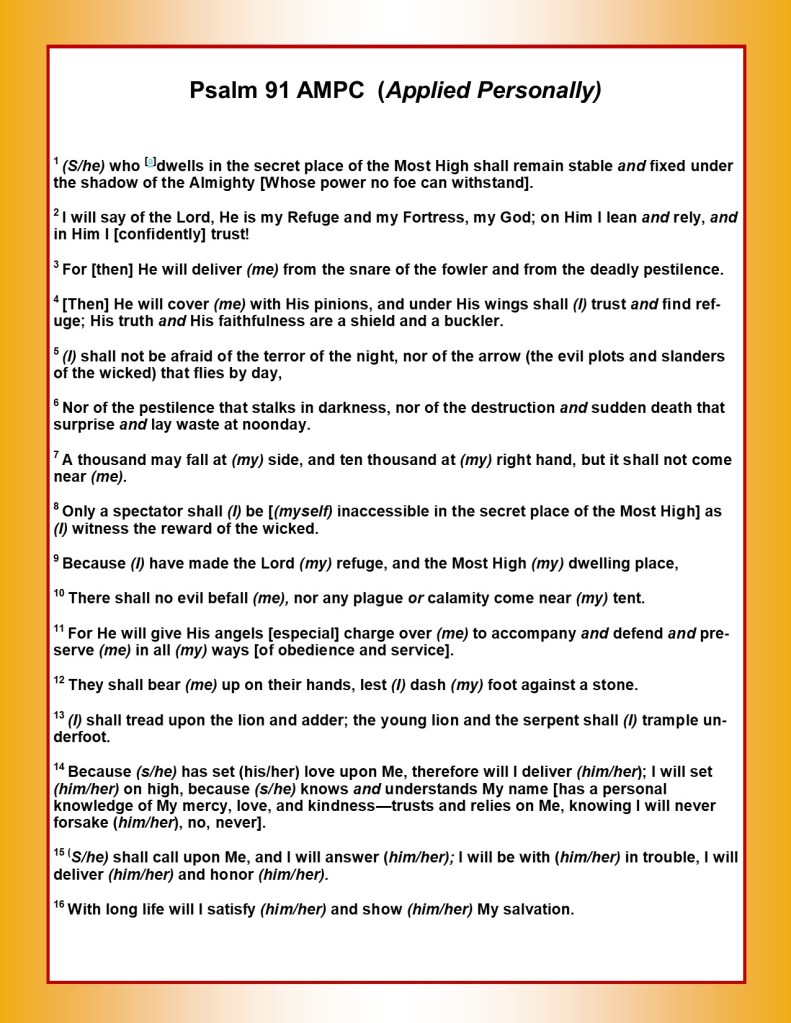
One way to practice abiding in the secret place of his presence is to memorize and meditate on Psalm 91. Consider personalizing the scripture as I have done here. Recite the passage out loud. Your confidence will deepen. Then, when you need help, you’ll be ready to recite his promises, reassured that he’ll keep his word. That’ll give you peace in the storm and influence the spiritual world in your favor. Learn to live in the secret place. As it says in verses one and two, and the promises found in the rest of the Psalm will be yours.
God bless you as you take time to be still before him. Enter the secret place, and put your trust in Him! Sometimes you’ll discover that you have entered in and didn’t even realize it! (That’s happened to me.) Most supernatural is too quiet for our flesh, as Dennis Clark likes to say. So, keep at it! Practice brings increase. When you look back, you’ll see your growth, probably more clearly than in the moment. God sees all. Blessings!
Me: There’s a couple different directions I could go from all the things we’ve talked about (in Part 1). Clearly you said that your wife said, before a certain point in time you were kind of hard to live with, but then you encountered this love. And so, it sounds like there’s been some radical changes in your life. And I don’t know if it’s possible to go into that a little bit more, if you want.
Bill: Sure. Okay. When you don’t know you are loved, you try to look for ways to be loved. You look for ways to be affirmed. You look for ways to achieve love. You look for ways to earn love. You try to do things. It’s like the story of Jesus being with Martha and Mary. Martha was so busy trying to please Jesus with her activity. She was driven to try to please Jesus through her service; where Mary just wanted to sit and listen and soak and receive from Jesus.
There’s this performance drive that lives on the inside of all of us. Until the Father makes his love real to us. Then, all of a sudden, you realize there’s absolutely nothing you can do, nothing you’ve ever done, or ever will be able to do, to be able to achieve, to earn, or deserve his love. He just loves. He just loves. He loves you unconditionally. So, we do a lot of things for a lot of the wrong reasons. Well, we do it for the right reasons, but they’re wrong in what we do.
I was very, very hard. I was a driven person, a performance driven person. So, I sought that in other people. I was very hard on Linda. I expected my wife to be a certain way and do certain things; it was very hard and difficult to live with. But when that happened to me – the realization was, there’s nothing I can do to achieve or perform. He just loves me. It blew me out of the water. For a couple of years, I had to reorient my whole way of seeing things because what was in me, that had been driving me, was gone. Now I was this person… all I wanted to do was spend time with him. From that place, fruit started to happen. I started to love people more.
There was a price that I paid because of that driven lifestyle, before that Father encounter. While raising my daughter, I was unemotional towards her. I was disconnected. I was non-relational. I was non-touchy feeling. So, she was raised by a man that was exactly like my dad, just un-relational. Well, after that encounter, all of a sudden, all I wanted to do is find ways to reach out, find ways to…. Matter of fact, I wrote a letter to her of apology, telling her that I hadn’t realized what I was like. She has kept that letter to this day. She lives with us here in Montana, along with her eight kids. We all live together. That could not have been possible before this encounter with the Father, because I was just a very, very hard person to live with.
I’ll say this too. When your insides are unlocked from all the bondage emotionally, you have a season that you’re going to have to learn how to live in those new emotions because you’ve never experienced them before. So, there was a bit of a roller coaster while walking it out. But yet, I was always aware of his presence and his love for me as I walked through that. There’s been a lot of challenges since that time, since that encounter, but I’m not alone, ever. So, I hope that’s helpful.
Me: It’s beautiful. That’s very good. Thank you.
So, your daughter lives with you, along with eight kids. Wow! Do they do soaking prayer with you?
Bill: Some of the grandkids do. Yes, some of them do. They come out. There’s a couple of them that come out occasionally, some more regularly than the others. But yes, absolutely.
Me: How old are these kids?
Bill: The youngest is about 10 months and the oldest is 12.
Me: And they’re on the young end for sure. So, how about that 12-year-old? Does the 12-year-old ever come?
Bill: She comes occasionally. She likes it probably more when we worship. We meet on Tuesday nights for soaking and sometimes for intercession. But we also meet on Saturday nights. That’s when we have worship and teaching.
Me: Very cool.
Bill: Well, know this, Mary, we built this building that we’re in right now. We built this when we moved to Montana. It’s strictly a house of prayer. For the last two and a half years, we’ve had nothing but worship going on 24/7 inside here. We meet here and God’s just so good. His presence is so wonderful!
Me: I remember, before you moved, you talked about wanting to build that place.
Bill: Or something like it, because churches for the most part, always lack room. Most church buildings are multiuse. I just wanted a place that was strictly his, where his presence could be here. There wouldn’t necessarily be socials here. It’s a place of his presence.
It always was a dream of mine. When we moved here, there was a concrete slab on the ground. I didn’t know what to do with it. So, I started asking the Lord about it. Two years later, we’ve got this building that houses the presence of the Lord. It’s amazing actually.
Me: Did you build it?
Bill: I put about 60% of the work into it. I had about 40% assistance and help from others that actually knew what they were doing. And it took two years.
Me: That’s good.
Bill: Yep.
Well, going back to the soaking topic, or experiencing God; let’s just call it that. Back to the experiencing God side of things. If you were to talk to someone, it doesn’t matter their age, young or older people who have never experienced God; they’ve heard about him, but they haven’t really met him, or not very deeply anyway. Say they’re hungry for that. What would you tell a person like that to do, in order to position themselves to encounter God, to experience God?
Bill: Well, I know for me because I’m wired towards physical touch… I would say, seek out people who do the presence of the Lord, or ministries that carry the presence of the Lord. For most people, their first encounters with the presence (I’m not saying all people but for most); their encounters with the presence of the Lord happen during worship. They’ll go to a service, or a meeting, and they’ll feel something that they know is not them. Some people call it goosebumps. Other people, experience different signals of God’s presence.
Out of your belly shall flow rivers of living water, the Bible says. A lot of times you’ll feel peace deep on the inside of you. Part of it is recognizing his presence. Always presence is related to peace. You can’t have his presence without peace. That’s a real safe understanding of the presence of God.
When I started to feel his presence on the inside of me…. Now people sometimes struggle with that word feel. I guess you got to get over it. We are created with spirit, soul, and body. Every part of us was God’s idea. And so, you and I were meant to experience the presence of God.
Part of it is building a faith that believes it is the will of God for you to experience God. There’s a lot of things that I could share from the word that can help facilitate that, but we’re limited in time. The key, I think, is something I remember F.F. Bosworth saying, “Faith begins where the will of God is known.”
You must first believe that God really wants you to experience him. We have a book that we give out everywhere we go. It’s all about experiencing him. My wife, also, wrote a book on learning how to experience God. There are areas of intimacy where simple little practical tools to learn how to experience God can be helpful. He wants so badly to talk to each one of us. Matter of fact, he’s always talking to us, but we’ve just not turned the dial on the tuner to be able to hear because, in general, initially we don’t really believe the God of universe wants to talk to us.We think, “Why would he want to spend time with me?”
A lot of things that have happened in my life have occurred because of encounters with God. It’s where I’ve experienced something significant that changed everything. And so, I encourage people initially, to go places, and be with people that carry a heart to experience God’s presence. A corporate gathering is typically where people will experience him for the first time. That doesn’t limit him to only that, but it does help folks who want to learn how to experience God.
Think of the Bible. We always say, “What is the Bible? It’s the word of God.” And that is true. But if you look at it, the Bible is a bunch of stories about people experiencing God. It is all about experiencing him. And I think once you’ve tasted and seen that the Lord is good, something on the inside of you won’t let go….
Me: Bill, do you happen to have the titles, or even the book itself that you could put up to the camera? (He holds it up.)
The title reads, “Always Loved; You are God’s Treasure, not His Project.” The author is Brent Lokker.
Bill: That’s our favorite book. We give that away everywhere. This is my wife’s book. (He holds it up.)
Me: “Intimate Life Lessons,” by Linda Boone. Can people order those on Amazon if they want?
Bill: Probably not “Intimate Life Lessons.” You have to go to our website for that, which is encounterhislove.com.
Me: Didn’t even know you had a website. That’s great!
Bill: Yeah. You can order it there. I’ll package it up and send it out, for that particular book. Yeah. Like I said, I’m probably going to box up a bunch of books for you, so you can give some to your Nepali friends and so you can have some.
Me: That’s very generous. Thank you.
Well, we were talking about how people can experience God through their love language, and you said probably your top love language is feeling. Do you have any examples of what it’s like for somebody with a different love language to experience God?
Bill: Well, if you describe the five love languages, you’ve got: gifts, words of affirmation, quality time, physical touch, and acts of service. Obviously with physical touch, it’s my sense of feel of the presence of God. It took me a while to realize, when I felt the presence of the Lord, that was him loving me. The simplicity of that. When I sense and feel that presence, not just read about it scripturally. I can quote the scripture, “He’ll never leave me or forsake me,” but to actually feel and experience that presence: it’s him loving me.
It’s not hard to see his love. You can use the experience of Jesus at his baptismas an example. There you can see aspects of those five love languages. What did the Father say to the Son? “You are my Son in whom I’m well pleased.” He then had the Holy Spirit come on him as a dove. Jesus felt something. He heard something. Those were keys, I believe, to set the pace for his ministry.
Jesus had to hear that. It wasn’t about ministry. He loves him. It wasn’t about ministry when Jesus experienced his Father’s presence. It was about the fact, that’s how the Father felt about his Son. The words “beloved son” means to be loved. So, you can see some of those kinds of things. That’s affirmation, hearing the words, the words of affirmation.
Me: I’m just thinking about the dove descending. It’s an example of the gift-giving love language. The Father spoke an encouraging word.
Bill: Yeah. But also, Jesus felt that presence, and so there’s touch in there.
I have another teaching, when it comes to our basic needs as human beings, that fits even more readily into that whole relationship Jesus had with the father, that we see exampled in the in the baptism. I think it was Bill Johnson who said perfect theology is Jesus. Look at Jesus’s life. You want to know what perfect theology is? Look at his life. You can get pretty much every pattern that exists by looking at the life of Jesus.
This is a primary thing: many are focused so much on Jesus (which is a good thing) but who did Jesus focus on? If you look at the New Testament, the Father. Jesus didn’t come to reveal Jesus’s will. Jesus came to reveal the Father, the will of the Father, to show what the Father was like. And so, the destination, as it says in John 14, “I am the way, the truth and the life. No one comes to the Father except through me.” And later Phillip is saying, “Show us the father and it’ll be good enough for us.” But really, Jesus is going, “Phillip, Phillip, dude, when you’ve seen me, you’ve seen the Father.” So, the essence of this whole thing that we’re walking is, Jesus never meant for you just to focus in on him. He meant for you to see who the Father was like, what he’s like, and how crazy he is about who you are. So that you could be the son or the daughter that he wants you to become. But that only comes by knowing and hearing and understanding his love.
So, endeavoring to come into a place, like I said, a lot of it’s keyed to being around people who carry his presence and his love. We were never meant to walk alone. We’re to be fathered and mothered in the kingdom. You know, finding those people who will actually disciple us and walk with us, and father and mother us into the things of God.
“Mercy! Forgiving when it’s Hard” covered certain misconceptions about forgiveness, misunderstandings that get in the way of our willingness to forgive. It was written primarily to help us take down strongholds of the will and strongholds in our understanding, so we will hopefully let go and take the forgiveness plunge.
This second post on forgiveness focuses more on the emotional aspect: forgiveness in situations that are loaded with heartache and trauma! As we learn how to release what we’ve been carrying around emotionally regarding specific forgiveness situations, whole memories can be redeemed. Then our emotional reactions in the present can change. No more “faking it until you make it!” Real change is accomplished by the Holy Spirit. It’s quick and easy once we decide we’re ready to let go and know how!
We release our painful emotions to God. He takes them and gives us his loving emotions in their place. We can receive deep cleansing. We can be set free, restored and made even stronger. We can give him our hurts. Then Lord can then remove ugly buttons from our hearts; buttons that get pushed and set us off in the present because of something unhealed in our past.
As we entrust him with washing out our hurts, we’re taking intimacy with God deeper, moving our relationship with him to a whole new level. We’re moving in childlike faith. We’re exposing those painful emotions associated with our memories to his tender loving, healing, cleansing river. Then God can wash us on an emotional level. We’re cleansed and more able to express the beautiful fruit of peace and joy in the Holy Spirit more of the time.
“How do I change the way I feel?” you may wonder. Without the Lord, you probably can’t! All you can do is push the pain back down into the subconscious to have it pop back up later. But GOD within you can if you’ll let him! He can remove any emotion we’re willing to give him. He can change our hearts. He can do it in seconds. He can put the opposite emotion in its place, and he will do it when we make room for him to work within our hearts and ask. What an amazing trade! Beauty for ashes, the oil of joy for mourning, a garment of praise for the spirit of heaviness! What a trade! What love! Will we trust him enough to let him do it?
Ready to let God move? Great! Pray this way: “God, I trust you with my heart. Lord, change me. I let go of what happened. I set all others free and I set myself free of this memory and its pain. I give you my feeling of _____. I don’t want it anymore. Not just the idea, but from my gut I give you the actual feeling itself. The new me, the completely healed me seated in heavenly places with Christ does not have this feeling, so I don’t want it in me here on earth either. I give you permission to do emotional surgery on me and remove what does not belong. Release your holy river and wash through my innermost being.
I won’t hide my feelings from you or try to manage them on my own, I give it all to you…. (*Now wait in silence with an open heart until you feel an emotional shift. It only takes a moment. It may help to imagine God’s river washing through your belly. You’ll know when it happens. You’ll feel the shift.) I receive your peace and your joy. Thank you for taking that emotional burden away. Thank you for giving me the courage to trust you with all this. Thank you for helping me let go. Thank you for this new ___ feeling inside. I feel so much better!”
Isaiah 61:3 ESV
…to grant to those who mourn in Zion— to give them a beautiful headdress instead of ashes, the oil of gladness instead of mourning, the garment of praise instead of a faint spirit; that they may be called oaks of righteousness, the planting of the LORD, that he may be glorified.
Copyright 2025
Comment below was added based on private reader feedback:
*The shift that can be felt, at minimum, is, that icky feeling in the person draining away. If they feel nothing afterward, keep in mind, nothing is a big improvement. Nonetheless, when the hurt is gone, the person can receive the opposite feeling by faith and thank God. It’s done.
“Jerusalem, Jerusalem, who kills the prophets and stones those who are sent to her! How often I wanted to gather your children together, the way a hen gathers her chicks under her wings, and you were unwilling.” Matthew 23:37 NASB 95
Are we willing to trust, to come closer, to snuggle under the shadow of the Lord’s wings and stay there?
When He spoke these words, Jesus knew difficult days were coming. He longed to gather God’s people together, close to himself, and protect them. Yet He finished His statement by making this sad comment, “and you were unwilling.”
Recently I had a strange dream. I saw a man-sized hen walking among people some distance away. Suddenly she was in my face. It startled me – to suddenly be eye to eye with a huge chicken. That chicken was in my personal space and close enough to peck my face! Unnerved, I looked in her eyes. The tenderness that was in the hen’s eyes became apparent. Maybe this hen likes me.But could I trust her, or should I flee? I awoke with the dream’s memory freshly intact and feelings of uncertainty swirling.
That chicken reminded me of a traumatic childhood incident. While walking through my neighborhood a German Shepherd approached me wagging its tail. I liked dogs so began petting it. Suddenly that dog stopped wagging, bared its teeth and lunged for my arm. He tore a big swath out of my coat. The experience deeply frightened me. Would this chicken be unpredictable and turn vicious as that dog did? Could I trust it?
The eyes of that hen looked strangely familiar. Lord, was that You? Did You come to me in the form of a hen, in my dream? Dreams can be strange that way! As I researched and pondered the possible meanings of this dream, I came across the Matthew 23:37 and the dream began to make sense.
In Psalm 91 it says: “He who dwells in the shelter of the Most High, who abides in the shadow of the Almighty, will say to the LORD, “My refuge and my fortress; my God, in whom I trust. For he will deliver you from the snare of the fowler and from the deadly pestilence; he will cover you with his pinions, and under his wings you will find refuge; his faithfulness is a shield and buckler.” Psalm 91:1-4 RSV
Tumultuous times began before the Presidential election of 2020. They continue into this 2024 Presidential election cycle. We live in unprecedented times. Unusual events are happening and they are not over. The closer the people of God can get to the heart of God and to each other, the more deeply we can trust in the Lord, the safer we will all be from any coming storm.
Let us receive healing from our past traumas and anything else that causes us to remain aloof from the One whom we should trust. Let us put our trust more fully in the Lord. Let us find our resting place close to God, remaining stable and fixed under His wings, near each other, safe from any oncoming trouble.
There is much deception out there these days. Whose report do we believe? Is this or that real? What is the truth? “Jesus said…, ‘I am the way, and the truth, and the life. No one comes to the Father except through me.’” John 14:6 ESV
My suggestion to you is to draw near to the author of Truth. Put your trust in Him. Shed all internal misgivings you feel toward Him. God is absolutely good! Avoid what distracts from building that trust. Get closer to Him. Stay under His wings! How? Keep reading and you’ll find one suggestion.
For help with heart issues consider utilizing the Praying Medic’s relatively new book entitled, “Emotional Healing Made Simple.” I have found it helpful. The author doesn’t know I am suggesting his book to you. May the Prince of Peace be with you in ever increasing ways!
“Don’t worry about anything; instead, pray about everything. Tell God what you need, and thank him for all he has done. Then you will experience God’s peace, which exceeds anything we can understand. His peace will guard your hearts and minds as you live in Christ Jesus.” Philippians 4:6-7 NLT
Jesus loves you and wants to gather you under His wings like a hen gathers her chicks!
Note: Bible references taken from blueletterbible.org